


Society
Can we organize differently in the current neoliberal system? Insights from the Lebanese multiple crises context



In recent years, there has been an increasing concern about whether the current economic system – capitalism with its neoliberal variant – allows for a transition for an age of multiple crises where climate changes and wars may give rise to scarcity after living in age of abundance. Many studies focused on exploitation and accumulation as characteristics of this system that are at odds with the necessity to transition towards a more sobber way of consumption. In my research, I suggest examining how the theory of choice, coupled with a systemic stigmatization of alternative values to the neoliberal ones, erode the capacity of individuals to deal with scarcity.
My paper explores this question through the study of the Lebanese case. It shows how in this context, the progressive introduction of neoliberal values eroded the traditional role of mothers who ensured collective survival in times of scarcity, by favorizing a social organization that I term as commoning in reference to Valérie Fournier’s work. The concept refers to an organizational model around shared resources in a group of people who care for each other.
The case: Lebanon’s collapse (2019 – 2022) and multiple crises
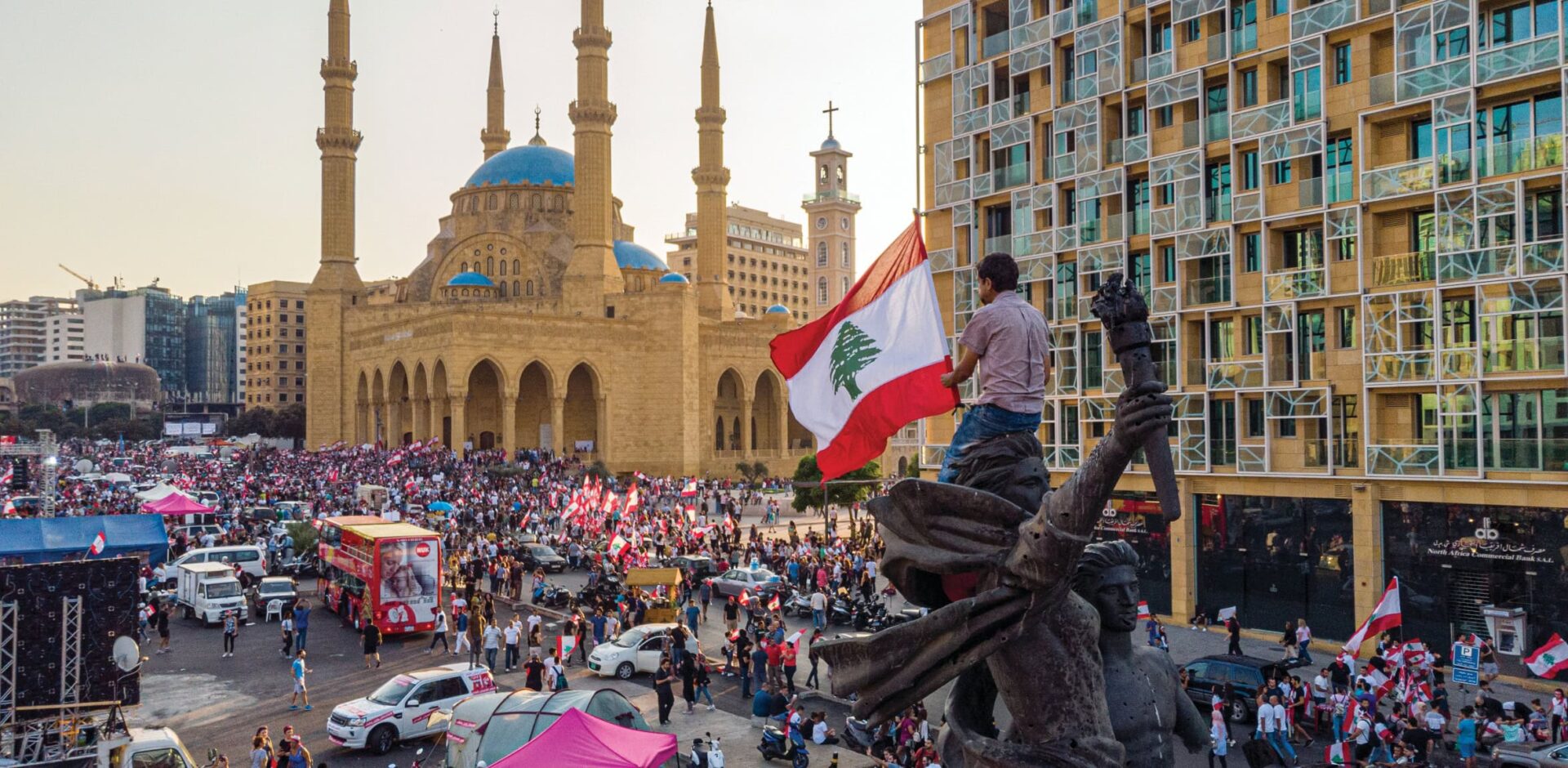
Since 2019, Lebanon has been facing a multifaceted crisis, primarily manifesting as a severe shortage of resources and widespread poverty. Before 2019, based on consumption patterns, the country was considered relatively developed. However, a major economic collapse – triggered by longstanding political corruption – began in October 2019, sparking nationwide protests. Soon after, banks froze deposits, halted withdrawals, and the Lebanese pound began losing its previously fixed value against the U.S. dollar.
This financial turmoil was compounded by recurring COVID-19 lockdowns in early 2020, pushing over 80% of the population below the poverty line by 2021. The situation worsened in August 2020, when an explosion at the Beirut port killed over 200 people, injured thousands, left hundreds of thousands homeless, and caused damages exceeding $4 billion – almost a fifth of the national GDP at the time – according to the World Bank.
These events dramatically eroded purchasing power. For instance, by autumn 2023, a salary that had equaled $4,000 in 2019 was worth just $60, in a country dependent on imports for basic goods. Simultaneously, critical shortages of essentials – ranging from medicine and infant formula to fuel and electricity – further strained daily life. With banks continuing to withhold personal deposits, many middle-class families plunged into poverty.
This crisis was not the first of its kind. The country witnessed multiple crises ranging from famines, decreases in purchasing power, as well as wars before. It is reputed for its capacity to reconstruct and catch up in some aspects of the economy. Most of the time, to be able to repair its losses, the Lebanese society relied on a dense social network of care and solidarity centered around the traditional role of mothers. In 2019, when crises begun, arrangements based on these networks seemed compromised. The study examined the reasons that eroded this capacity to re-organize to deal with scarcity.
The erosion of the authority of mothers in the neoliberal age: From sacred beings to parasites
Traditionally, mothers in Lebanon were viewed as sacred figures with legitimate authority over their families. Songs, poetry, and public expressions refer to maternal love and sacrifice, reinforcing their influence within the household. In practice, this moral standing translated into real decision-making power over matters such as children’s education, marriage, and financial planning. This maternal authority was not enforced through formal rules but rather accepted as legitimate due to the widespread belief in a mother’s devotion and wisdom.
However, this deeply rooted authority has been challenged by neoliberal ideologies that emphasize individualism, personal choice, and market-driven logic. These values have reshaped how family roles are understood, particularly undermining the traditional perception of mothers as experts and references in family and community life.
The rising importance of choice
Today, their intervention in their families’ life matters is viewed as parasitic. For instance, when some mothers attempted to assemble their children’s families in one household to share resources such as electricity or food that become cheaper when shared, concerns over choice arose. Who will selectthe daily menu? Who will choose the TV program? Etc. This issue of choice was historically not problematic as people did not use to give so much importance to such decisions. This is where the belief in the theory of choice became an obstacle to the commoning arrangement necessary to overcome scarcity problems.
Individualization of social problems
Another issue pertained to the feeling of individuals that they are responsible for their misery. Receiving help became viewed as a form of incapacity to deal with one’s own problems. Despite the demonstrations denouncing politicians’ responsibility for the economic crisis, many felt that they should deal with their own financial difficulties and shouldn’t accept maternal arrangements usually redistributing resources among their children.
Choice, identity and individualization
The individualization of ways of life, but probably also the differences in practices and abilities among social classes, made it difficult to anticipate what you would accept to receive. Benefiting from donations, even when in extreme need, became a source of anxiety. For instance, in the past, people would have accepted with gratitude that their child got the same milk as the donor’s. Now people wonder if the maternal milk they are receiving conforms with their values and food practices, attaching consumption to identity matters that did not exist before. On the contrary, mothers used to push towards similar practices that integrated the family within society.
The stigmatization of commoning
Overall, the culture in which we evolve is largely infused with neoliberal values pushing us to look up to individualization and choice and down to alternative values that may ease the development of other organizing arrangements necessary for the survival of many. While commoning in the Lebanese tradition relied on values such as behaving like everyone else (or downplaying identities), and caring for overall wellbeing, neoliberalism promotes the opposite: branding oneself and accumulating to claim individual success. In this context, the traditional role of motherhood has eroded. The hegemony of neoliberalism is such that we now feel ashamed, regressing, failing, and guilty if we do things differently. The self-regulatory aspect of neoliberalism is so powerful that it is difficult for many to imagine themselves as better off when living under a different arrangement. This, in turn, facilitates the conservation and actualization of neoliberal values and organizational arrangements both at the society and economic level.
Also, neoliberalism by nature undermines collective action. In addition to “pacifying” the political sphere by putting on the market the political, it undermines the possible organization of alternative voices in a confrontational manner. Neoliberalism pushes people to sacrifice everything they have always invested in, the “human gold” as Lebanese say, or social relationships, at the expense of material goods that are perishable. This fragments the collective and makes it more difficult to challenge neoliberal hegemony, since suffering is individualized.
This research also invites readers to become aware that we might be judging some arrangements today through a neoliberal lens. It also encourages them to reconsider different cultures and their organizational arrangements in terms of options with advantages and disadvantages that might be suitable for different situations when rebuilding a sustainable and inclusive future for everyone. Pluralism is not just a political claim. It is a necessity for keeping our minds open to the various social and economic systems that could help humanity survive crises and find sustainable ways to exist on this planet.
This article relies on the academic work:
Younes, D. (2024). Stigmatizing commoning: How neoliberal hegemony eroded collective ability to deal with scarcity in Lebanon. Gender, Work & Organization, 31(1), 245-263.
DOI: https://doi.org/10.1111/gwao.13070
Further readings:
- Fournier, V. (2013). Commoning: On the Social Organisation of the Commons. M@n@gement,16(4), 433-453.
DOI: https://doi.org/10.3917/mana.164.0433 - Byrne, C. (2017). Neoliberalism as an object of political analysis: an ideology, a mode of regulation or a governmentality? Policy & Politics, 45(3), 343-360.
DOI: https://doi.org/10.1332/030557316X14800750043260 - Daskalaki, M. (2017). Alternative organizing in times of crisis: Resistance assemblages and socio-spatial solidarity. European Urban and Regional Studies, 25(2), 155-170.
DOI: https://doi.org/10.1177/0969776416683001 - Federici, S. (2018). Re-Enchanting the World: Feminism and the Politics of the Commons. Oakland, California: PM Press.
ISBN: 978-1-62963-569-9 - Kanai, A. & Gill, R. (2020). “Woke? Affect, Neoliberalism, Marginalised Identities and Consumer Culture.” New Formations, (102), 10-27.
DOI: https://doi.org/10.3898/newf:102.01.2020 - Thompson, C. J. & Kumar, A. (2018). Beyond consumer responsibilization: Slow Food’s actually existing neoliberalism. Journal of Consumer Culture, 21(2), 317-336.
DOI: https://doi.org/10.1177/1469540518818632