


Leadership & Management
High performance management systems: what the Sri Lankan tea plantations may teach us



High-Performance Work Systems (HPWS) represent a well-established idea in people management. When we talk about HPWS, we mean a cohesive set of human resource practices that enable bottom-line organizational performance, typically tangible financial or productivity results. As HPWS are understood at present, they are structured around three pillars.
The first one concerns the people flow, practices about how people enter and evolve within the employer. Relevant practices include sophisticated recruitment and selection techniques (such as structured interview and psychometric testing), systematic training, and internal merit-based career opportunities.
The second pillar is constitued by appraisal and rewards, practices that relate to how employees are evaluated and how they are rewarded. They include formal performance appraisal, competitive pay, and extensive open-ended rewards, such as various types of benefits and facilitating arrangements.
And the last one represents the opportunities for employee involvement, practices that promote employee input, autonomy and participation. They include formal participation structures (e.g., employee councils, trade unions), planned job design (broad job descriptions, autonomous work teams), and open communication and information sharing.
Two Question Marks over HPWS
There is substantial evidence that HPWS are related to bottom-line organizational performance. In fact, the first study, authored by Huselid in 1995, to provide such evidence is one of the most influential articles in the history of management research.
The above said, however, there is debate on two critical elements. First, the longevity of performance benefits of HPWS: are the performance gains sustainable over the long term, or are they short-lived? If the latter, HPWS may not deliver sustainable performance. Second, employee well-being and benefits to other stakeholders: there are concerns that HPWS deliver by suppressing workers’ well-being (elevated stress, burnout, compromised physical health) along with ignoring the interests of other stakeholders. For example, they arguably incite work intensification that compromises family or community life.
The Case of the Sri Lankan Tea Plantations
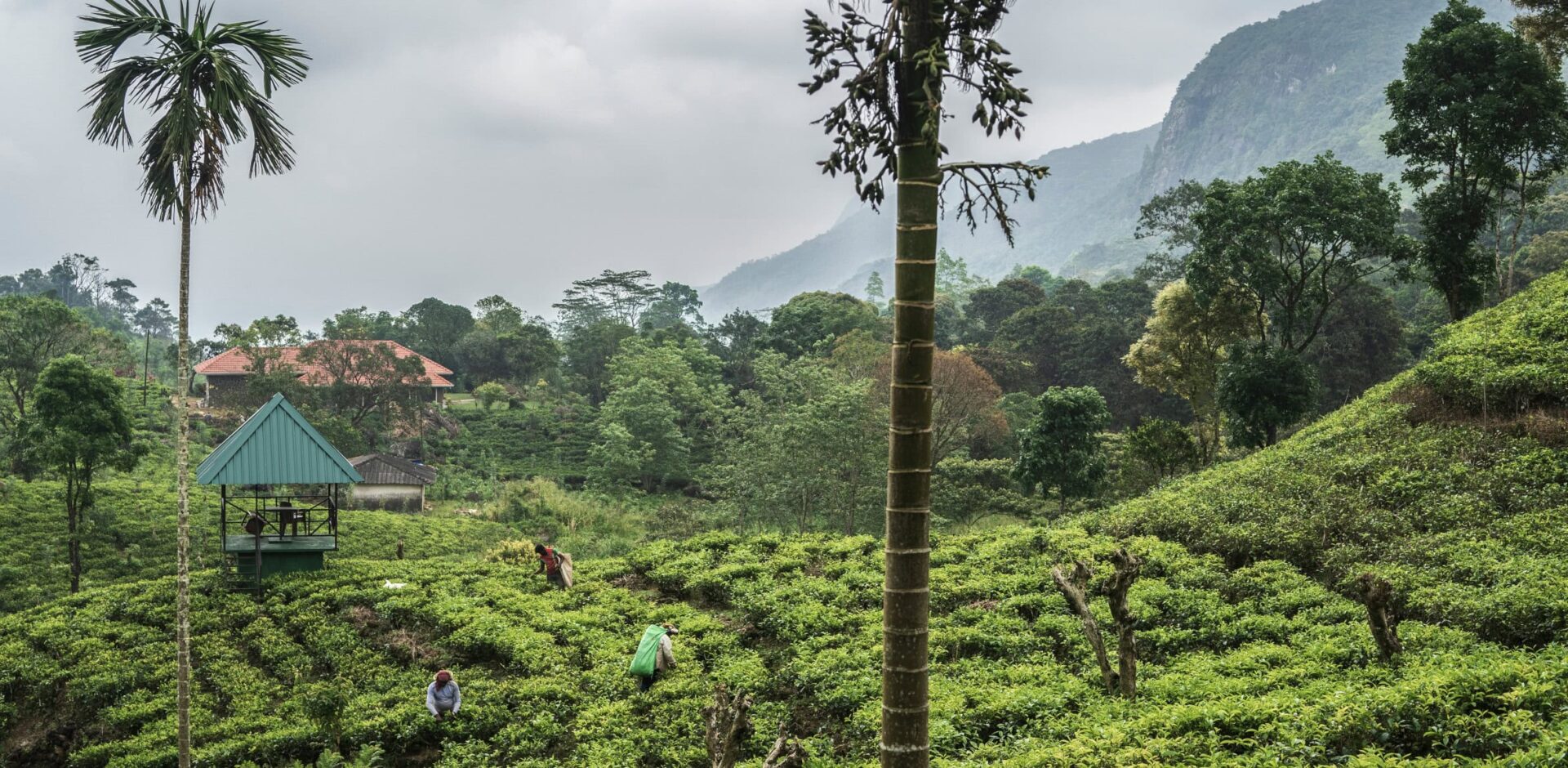
In a recent study, we explore the Sri Lankan Tea Plantations as it provides an interesting setting where we were able to test whether HPWS – the way we understand them today – are the only alternative. The plantations meet the criteria of a long-term well-performing organization with a substantial social impact because they demonstrate longevity and profitability: they have operated successfully for over 150 years, showing long-term sustainability – a rare feat in any industry.
Second, they have a significant economic and social impact as tea accounts for nearly 15% of Sri Lanka’s exports and employ 5% of the country’s workforce, directly and indirectly. The sector is a pillar of the national economy.
The plantations fill as well the third criteria steady employment, which they have maintained at a high level for generations.
The aim of this study was to find out what HR practices plantations use, and whether these practices deviate from or are similar to the currently established HPWS model.
We conducted over several months in a representative tea plantation with observation and interviews with all stakeholders ranging from operational level workers to all levels of management, the trade union, and various community stakeholders.
The findings suggested extensive differences between HR practices in the Plantations and HPWS:
- People Flow: Inheritance-based with minimal sophistication.
With regard to recruitment and selection, employment is inherited, with children of current workers automatically joining the plantation workforce upon reaching adulthood. The same applies to people who marry someone who works or lives in the plantation estate. There is not any kind of assessment for hiring. The system seems “primitive”, yet it guarantees a self-replenishing and loyal workforce.
As for the training, it is not a responsibility of the management. Instead, parents, relatives, and peers teach new workers through on-the-job learning and childhood play.
Last but not least, internal career opportunities are very limited. Workers typically remain in the same role for life. There is no career planning, and promotions are very rare. They may either switch from worker to field officer (in essence, first-line supervisor), but there are very few field officers overall. Or they may possibly transfer to the tea processing factory that has higher pay and is seen as prestigious work. The factory, however, employs very few workers. The criteria for these promotions are simply “character” and caste membership. - Appraisal and Rewards: Paternalistic welfare over performance metrics
There is no formal performance appraisal. Results are monitored by the field officers daily, but no documents are produced. However, the rewards are multiple and open-ended. While monthly pay is not high, the overall package is extensive and contains bonuses for workers who exceed daily quotas, housing, healthcare, and utilities free of charge. Retired workers are also entitled to continue living in the tea estate free of charge. The children’s education is covered as well, including university. And employment security is guaranteed for life. - Employee Involvement: Union representation and very little else
All worker input is channeled through the representatives of the trade union. Direct communication with management is essentially non-existent. Importantly, workers do not see the need for such communication. Besides, jobs have not evolved in decades. Male workers may rotate tasks, but female workers – who traditionally do tea plucking – perform the same job daily.
Teams are just a necessity: they do exist, but they are formed temporarily to facilitate supervision and for efficiency reasons, not for autonomy or motivation.
Differing but effective practices
The findings showed that the tea plantations achieve long-term profitability, employee well-being, and community benefits with the use of HR systems that significantly deviate from the established notion of HPWS. Recruitment and selection rely on inheritance with not even “standard” selection methods such as interviews. Training is automatic, simple, and on-the-job. Internal career opportunities are minimal and are based on ascriptive characteristics. There is no formal performance evaluation or official performance records. Job descriptions are narrow with minimal latitude, while worker participation and involvement is limited to union representation.
These practices may appear rudimentary, unsophisticated and probably “backwards”, yet they have been proven effective in the long-term.
A key finding was that the central philosophy behind people management in the Tea Plantations is company paternalism. It may appear costly, and deviates completely from the dominant belief of what obligations employers have towards employees that took shape in the 1980s in the “West”. However, the welfare-oriented management approach provides a constantly self-replenishing and loyal workforce, along with catering for the needs of the community. Furthermore, though many of the HR practices in the plantations may appear of low feasibility in today’s conditions, we should mention – as an example – that many companies in North America and Europe have scrapped the formal performance appraisal that has been omnipresent and “totemian” since the 1980s.
Overall, the findings do not necessarily dismiss HPWS as currently understood, yet imply the need for a broader, more inclusive framework. The Sri Lankan tea plantations show that alternative HR philosophies – prioritizing welfare, security, and community benefits – can achieve sustainable performance without relying on what we consider “indispensable” HPWS practices.
This article is based on the following refereed journal publication:
Bozionelos, N., Karunanayake, G., Bozionelos, G., & Mukhuty, S. (2026). A challenge to the contemporary notion of high-performance work systems? The case of Sri Lankan tea plantations. Personnel Review, 55(1), 151-174.
https://doi.org/10.1108/PR-07-2024-0671