



Society
Navigating Digital Mental Health Services – A Survival Guide


Digitalization has transformed many facets of our lives, and mental health services are no exception. The rise of digital options offers a compelling alternative to traditional in-person therapy, increasing the accessibility and convenience of getting help. But what does this shift mean for consumers? Are we genuinely advancing, or are there hidden pitfalls in turning mental health services into a digital commodity?
Over the past decade the digital mental health market has seen unprecedented growth. From mobile health apps to AI-powered therapy bots, the landscape is diverse and rapidly expanding. Traditional mental health services, once limited to face-to-face interactions in clinical settings, are now accessible via smartphones and computers. As consumers, we can celebrate having more accessibility and convenience of mental health help. However, this market evolution still raises questions about the quality of care and the preservation of the therapeutic relationship that is central to effective psychotherapy.
Navigating the world of digital mental health can be daunting, but understanding the different types of services available can help consumers make the best choices for their mental wellbeing. As I argue in my research into digital mental health services, we can imagine the digital mental health servicescape as a Wild West, where an unprepared consumer is struck by the sheer number of offerings available out there. Multiple actors all competing for limited consumer attention, professional clinical psychologists and psychotherapists compete with energy healers and life coaches. At the same time clinical grade psychotherapy platforms coexist alongside artificial intelligence chatbots.
Let’s dive in!
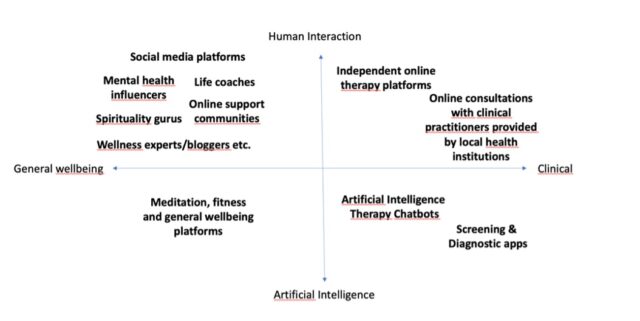
Source: Alisa Minina Jeunemaître
Self-Care Valley: AI Platforms for Consumer Wellbeing
Imagine a valley filled with AI-driven apps that promote mental balance and stress management. These apps, like guided meditation platforms and fitness apps with mental health components, offer flexibility and convenience. You can engage with these services at your own pace, making them a great option if you’re seeking self-help solutions.
These apps aim to improve daily life rather than treat clinical mental health conditions. However, it is essential to consider data privacy and the potential misuse of your information. Always check user reviews to gauge the effectiveness and reliability of the app. Pay close attention to privacy policies to ensure your data is protected. Trial periods or basic versions are useful for testing the app before committing to a subscription.
The Blue Pill: Clinical AI Solutions
In this realm, you will find AI-powered mental health applications designed to address mild symptoms of anxiety and depression. These apps often use cognitive-behavioral therapy techniques and provide self-diagnosis tools. They offer a practical, immediate solution for users who may not require intensive therapy.
While these apps have a solid clinical foundation, they still face challenges related to data privacy and the risk of users misinterpreting their symptoms without professional guidance. Ensure the app is based on clinically validated methodologies and offers features like emergency contacts. If your symptoms persist or worsen, do not hesitate to seek human professional help.
The Happiness Market: Human Actors in Search of Wellbeing
Picture a bustling market filled with mental health influencers and online communities. This space is deregulated, where clinical psychologists, self-taught practitioners, and even spiritual healers compete for your attention. Social media have democratized mental health information, destigmatizing mental health issues and creating supportive communities. However, the lack of regulation raises multiple ethical concerns. It can be challenging to distinguish between qualified professionals and less credible sources. Verify the credentials of mental health influencers and engage responsibly in online communities. Cross-reference information with reputable sources to ensure its accuracy.
The Therapy Room: Online Clinical Human Interactions
This is the more traditional form of therapy that has smoothly migrated into the digital format, without diluting what made it so effective in the first place. Licensed therapists offer online consultations through various platforms, providing regulated and credible services. These platforms often ensure the qualifications of their practitioners and may even collaborate with insurance providers to cover consultation costs.
This approach maintains the therapeutic relationship essential for effective therapy while offering the convenience of digital access. The uberization of therapeutic relationships provided by the digital aggregators platform, however, can potentially threaten the central element of psychotherapy – the therapeutic relationship between the therapist and the client. To get the most out of online therapy, choose platforms that verify the credentials of their therapists and check if your insurance covers online sessions. But most importantly, do not treat online psychotherapy in a similar way to online dating, “swiping right” on the endless choice of therapeutic profiles and hopping from therapist to therapist every session. Aim for consistent sessions with the same therapist to build a strong therapeutic relationship.
Making Informed Choices Matters
Digital mental health services present exciting opportunities to enhance your wellbeing, but making informed choices that suit your specific needs is crucial. Whether you are interested in self-care apps, clinical AI solutions, advice from influencers, or traditional therapy in a digital format, approaching it thoughtfully can help you find the support you need. It is important to remember that technology often advances faster than regulations can keep up, creating significant ethical and legal challenges for policymakers and service providers. This makes being an informed consumer more essential than ever.
This article is based on the academic work:
Jeunemaître, A.M. (2024). The Future of Wellbeing: Value Creation in Digital Mental Health Services. In: Bäckström, K., Egan-Wyer, C., Samsioe, E. (eds) The Future of Consumption. Palgrave Macmillan, Cham. https://doi.org/10.1007/978-3-031-33246-3_15