


Entrepreneurship & Innovation
Beyond subsidies: What a Colombian trout-farming venture teaches us about community enterprise success




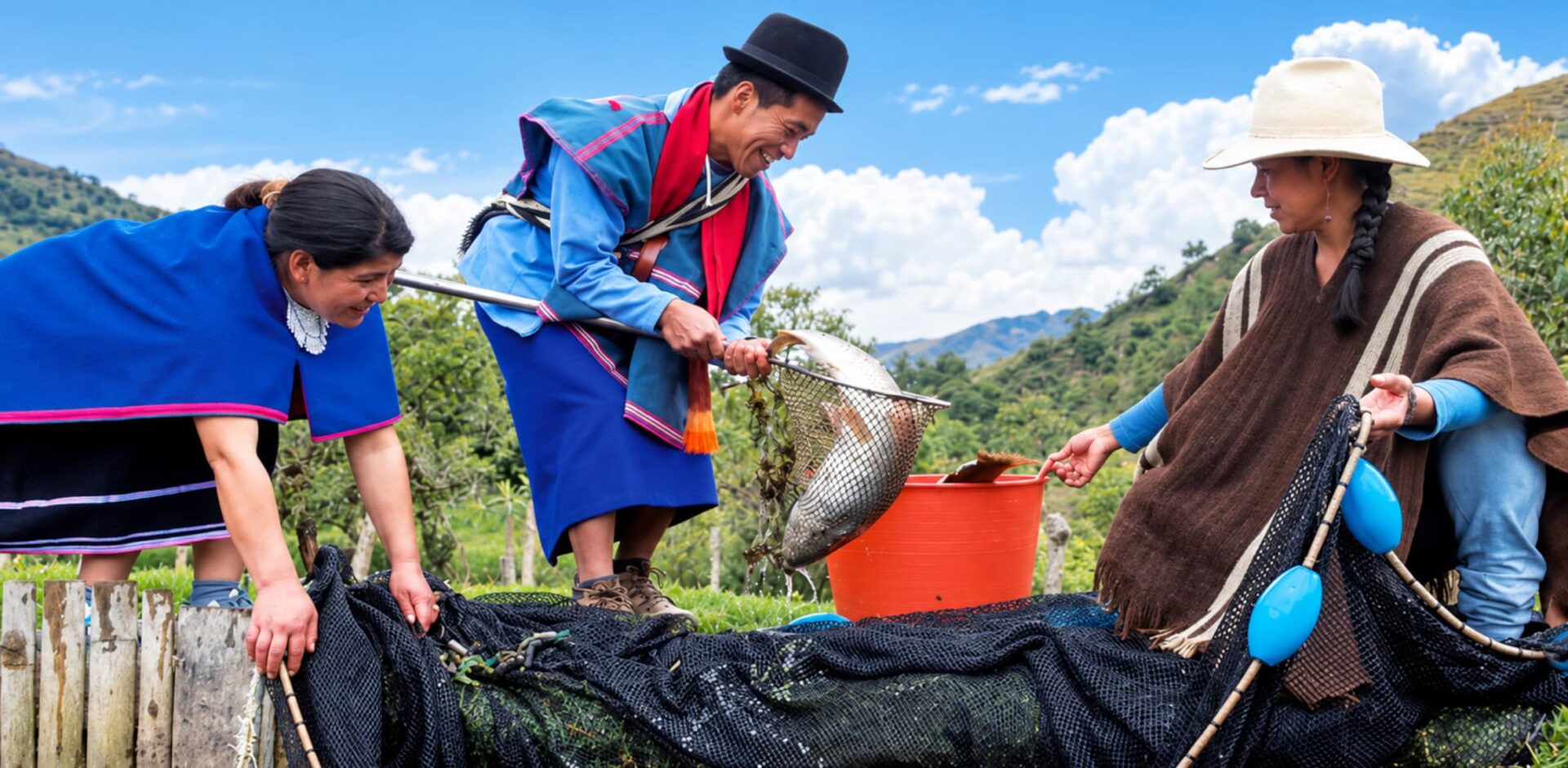
In 1995, Colombian authorities launched a trout-farming program in the Cauca region with a bold aim: to help Indigenous communities build legal livelihoods and loosen the grip of drug cartels on rural areas. Three years later, producers from several communities joined forces to launch APROPESCA, the Association for the Production and Commercialization of Agricultural and Aquaculture Products of Silvia.
The venture initially failed. Members lacked experience, depended heavily on subsidies, and struggled to establish a sustainable market presence. When public support ended, APROPESCA ceased operations.
Yet in 2004, the organization was relaunched, and this time, it succeeded. By 2017, it represented 325 families from three communities, Guambianos, Paeces, and Mestizos, that had not traditionally worked together, and it had become a lasting economic and social institution.
This remarkable turnaround raises a broader question: why do some community-based enterprises survive after subsidies disappear, while others collapse? In a study published in the Journal of Management Inquiry, we examine this question through an in-depth case study of APROPESCA. Our findings suggest that the answer lies not only in funding, market access, or technical assistance, but also in a less visible resource: community socioemotional wealth, the non-financial value that binds members to a collective enterprise and sustains their commitment over time.
Community socioemotional wealth, the invisible wealth of communities
Community-based enterprises are collectively established, owned, and controlled by community members. Unlike conventional for-profit firms, their purpose is also to create social, economic, environmental, and cultural value. Although APROPESCA is located in Colombia, community-based enterprises are not limited to developing economies. They exist across many contexts: Sami reindeer herders in Finland, Māori communities in New Zealand, Amish communities in the United States, and green energy cooperatives in Germany. The sectors differ, but the challenge is similar: how can a locally embedded enterprise remain economically viable while also sustaining community value?
To understand APROPESCA’s endurance, our study draws on the concept of socioemotional wealth from family business research. In family firms, socioemotional wealth refers to the non-financial value that families derive from their business, such as control and influence, identity, binding social ties, emotional attachment, and dynastic succession. We asked what happens when this idea is moved from the family business to the community-based enterprise.
In APROPESCA, the family is the basic unit. Economic objectives are closely tied to family welfare, community recognition, and intergenerational continuity. But community-based enterprises are not simply family firms on a larger scale. They pursue a broader community mission. That is why our study identifies two additional dimensions that are especially important in this setting: empowerment and holistic mission.
Why APROPESCA endured
APROPESCA survived because members experienced it as more than a production system. It became a collective project through which they could exercise influence, build relationships, support their families, gain recognition, and imagine a future for the next generation.
Community control and influence were central. Important decisions were made by community representatives, not by outsiders. This made the enterprise feel genuinely theirs, rather than a project owned by external funders or technical experts. For a community-based enterprise, governance is not only an administrative issue. It is part of what makes the organization worth preserving.
Shared identity also mattered. APROPESCA became a point of identification across different ethnic communities. Recognition from customers, institutions, and suppliers generated pride and a sense of collective achievement. This also explains why selling trout outside APROPESCA was not seen merely as a commercial problem. It threatened the collective identity that held the enterprise together. In this context, identity was not symbolic decoration. It was a coordination mechanism.
Social ties reinforced that identity. Workshops, farm visits, training sessions, payments, meetings, and community work kept members connected. One example is the Indigenous practice of ‘minga’, collective work organized for shared benefit, which connected productive activity to established forms of community cooperation.
These ties also created emotional attachment. APROPESCA was not only a place where members sold trout. It became associated with family welfare, community improvement, shared effort, and pride. This emotional attachment mattered because community-based enterprises often face periods when financial returns are limited, delayed, or uncertain. Members need reasons to stay involved beyond immediate income.
Future generations provided another anchor. Members saw APROPESCA as a path to better opportunities for their children and grandchildren. The enterprise was not only about present income. It was also about continuity.
Empowerment was equally critical. Through APROPESCA, members gained economic independence, recognition, and a stronger voice in regional politics. Some leaders later moved into public life. The enterprise helped put the communities on the map.
Finally, APROPESCA had a holistic mission. Success was never reducible to fish sales. Members understood it as encompassing community well-being, cultural preservation, environmental care, family welfare, collective learning, and regional development. These were not separate goals. They were part of the same organizational purpose.
A lesson for entrepreneurial support networks
Funding matters. Technical assistance matters. Market access matters. But they are not enough. A community-based enterprise also needs intangible forms of wealth that keep members committed once external support weakens.
For policymakers and development agencies, the implication is clear: do not evaluate community-based enterprises only as small businesses with social aims. Support should strengthen governance, leadership, community representation, collective learning, and relationships with external partners, without undermining local control.
For community leaders, the lesson is similar. Social ties, identity, participation, emotional attachment, and mission are not secondary to business performance. They shape it. They influence whether members continue to participate, whether conflicts can be managed, and whether the enterprise can survive shocks.
As the title of our academic article suggests, community socioemotional wealth acts as “the glue that binds distinct communities in enterprising.” Community-based enterprises do not endure only because they find a market. They endure when they become meaningful enough for members to carry them forward.
This article is based on the academic paper:
Siraz, S. S., Claes, B., Sanchez Preciado, D. J., & Theodorakopoulos, N. (2025). Community Socioemotional Wealth as the Glue that Binds Distinct Communities in Enterprising: A Tale of Success from Colombia. Journal of Management Inquiry, 34(4), 416-438. https://doi.org/10.1177/10564926241285798